
|| ଚକାନୟନ ||


I K A T
[ee-kaht]
(n.) a traditional textile technique which is characterised by intricate patterns made by resist tie-and-dyeing threads before weaving. Each thread's alignment creates a design that is both precise and organic, resulting in beautiful striations that embody culture, craftsmanship, and the beauty of imperfection.
Ikat's uniqueness lies in the uneven, blurred edges of colors in a design as a result of the tie-dyeing.
Results of the four-week textile workshop organized as a part of semester 7's curriculum, and guided by Mr. Arnab Senapati, Sri Moorli Garu and Sri D. Sankar Garu, have been presented.
Designs
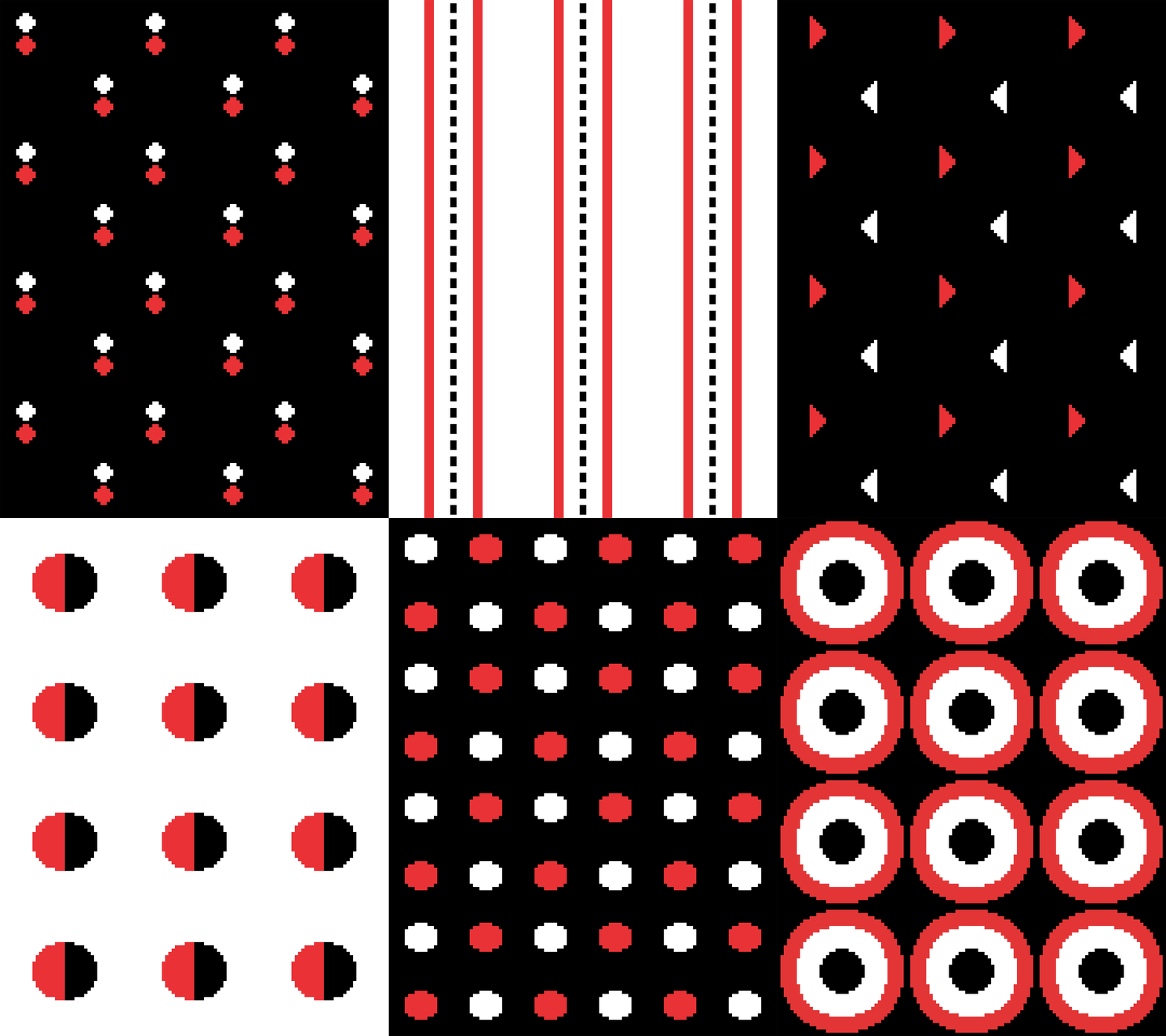
My inspiration was derived from Lord Jagannath, specifically the deity's eyes, known as "ଚକାନୟନ" in the Odia language.
The warp length was set to be 12 meters long and 14 inches wide, with each repeat being 24 inches long.


Process
1


The yarn is stretched and secured on a frame for the tying process.
2
Specific sections of the yarn are marked according to the design as accurately as possible.

4

The yarn is dyed, with tied sections resisting dye and creating the design. This process may repeat with different colors (from lightest to darkest).
3
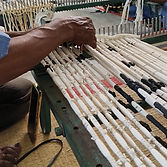
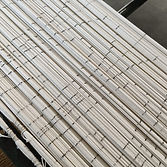
These sections are now tied with waterproof thread/elastic to prevent the dye from penetrating.

5

Dyed yarn is hung and air-dried to set the colors.
6
7

The ties are removed carefully, revealing the pattern.
The dyed yarn is arranged accordingly to be set on a loom.
8


The prearranged yarn is then adjusted so that the pattern is set on the loom as accurately as possible.
9
Once set up, the loom is ready to weave in!


